
During the operation of the Ethereum network, gas fees have always been the cost variable most directly perceived by users. When network congestion worsens, the cost of a single transaction may double or even go higher, directly affecting users’ willingness to participate in decentralized applications. The current fluctuation in gas fees is not random but is jointly determined by market supply and demand, transaction priority, and the pace of network upgrades. Understanding its internal mechanism and taking reasonable countermeasures is key to reducing transaction costs.

Composition and Market Logic of Gas Fees
Gas fees are derived by multiplying two core parameters: gas price and gas usage. The gas price is the amount of tokens a user is willing to pay for each unit of gas, reflecting the urgency of the transaction;
gas usage depends on operational complexity. For example, transfers, token swaps, and smart contract calls consume different computing resources, so the corresponding number of gas units also differs.
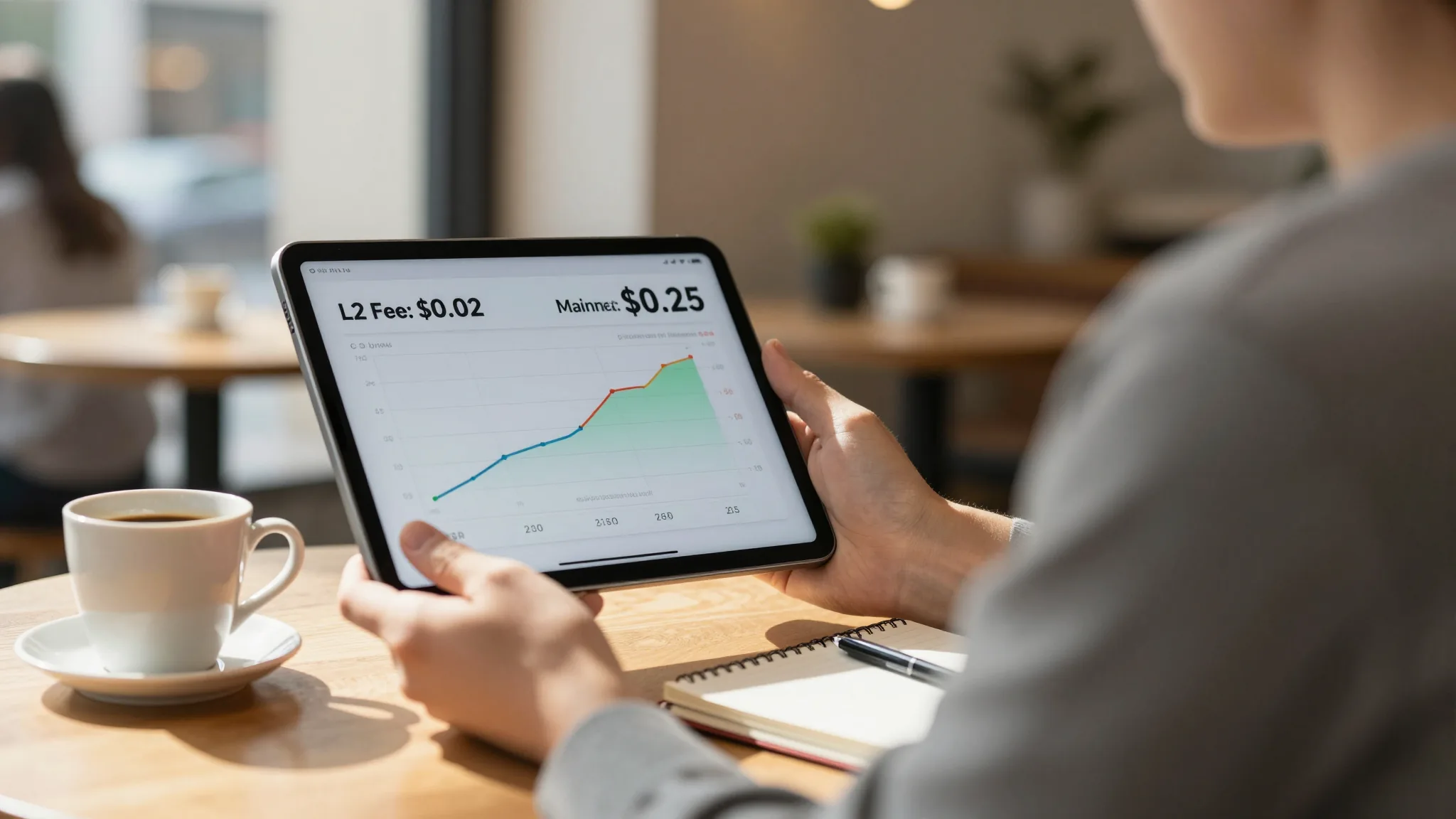
When the network is congested, many users compete for block space, and miners prioritize transactions with higher gas prices, causing overall fees to rise. Conversely, during idle network periods, users can submit transactions with lower gas prices and still have them confirmed within a reasonable time. Understanding this supply-demand relationship is the basis for developing optimization strategies.
The Relationship Between Timing and Network Load
Network load shows obvious cyclical fluctuations. Generally, on weekdays during daytime, transaction activity is higher and gas fees remain at elevated levels; on weekends and during nighttime, user activity decreases and fees often drop significantly. By observing the real-time gas price curves on on-chain data platforms, one can identify the daily low-fee windows.
For non-urgent operations, such as long-term position adjustments or large token transfers, transactions can be scheduled for submission during lower-fee periods. Some wallet applications have built-in gas prediction features that recommend the best submission timing based on historical data, reducing unnecessary expenses.
Gas Price Adjustment and Transaction Confirmation Strategies
Users can set the gas price for their transactions independently. Setting a higher price can shorten confirmation time and is suitable for scenarios requiring fast execution, such as liquidation or arbitrage operations; setting a lower price may prolong waiting time but can significantly save costs.
Some wallets support dynamic gas adjustment, allowing users to modify the price before the transaction is confirmed. If network congestion worsens, the price can be appropriately increased to avoid getting stuck for a long time; if congestion eases, the price can be lowered and the transaction re-broadcast to seek a more economical confirmation.
The Fee Advantages of Layer 2 Networks
As the pressure on mainnet scaling continues, Layer 2 solutions have shown significant effects in reducing transaction costs. By moving computational tasks off-chain and submitting only key data to the mainnet, Layer 2 networks can reduce the per-transaction fee to one-tenth of the mainnet cost or even lower.
For users who interact frequently, such as those trading on decentralized exchanges or minting NFTs, migrating to a compatible Layer 2 network is an effective way to control spending. Although cross-chain operations themselves may incur additional fees, in the long run the overall cost remains far lower than continuing to execute transactions on the mainnet.
The Impact of Protocol Upgrades on the Fee Structure
Ongoing upgrades to the network protocol are reshaping the distribution pattern of gas fees. The recently deployed Pectra upgrade has significantly reduced the data submission costs of Layer 2 networks by improving data throughput capacity, with some operation fees decreasing by as much as a hundredfold.
The subsequent Fusaka upgrade introduces a dynamic data availability mechanism, allowing the network to flexibly adjust data storage capacity based on actual demand, avoiding resource waste caused by fixed upper limits. These technological developments show that the optimization of gas fees depends not only on user-side strategies but is also profoundly influenced by the evolution of the underlying protocol.
To keep track of the dynamic changes in gas fees, it is necessary to make comprehensive judgments based on network status, transaction timing, and protocol upgrade progress. Regularly checking fee trends on on-chain data platforms and understanding the impact of protocol updates on the cost structure can help make more economical decisions amid volatility.
Related reading
- Contract Signals: When NDAs Become the First Line of Defense in Risk Governance
- Layer 2 Blockchain Wallet Ecosystem: User Asset Security and Experience Divergence Amid Mu
- From a Failed On-Chain Transfer: Practical Boundaries and Risk Review of Crypto Meme Coin

Bitcoin has moved sharply lately, so the upside and the risk need to be measured together.
Checking network fees and platform rules before a transfer is especially important for beginners.